
The 20 Rescue Behaviors: a practical lens for reducing hero culture.
Senior leaders can use the Rescue Behaviors as a language system for spotting hidden dependency, decision bottlenecks, and burnout patterns before they become culture problems.
Executive-ready consulting
Anti-hero leadership lens
Leadership rescue behavior.
This page now makes the diagnostic intent clearer for searchers looking for burnout, accountability, and leadership behavior content.
Use it as a self-assessment path.
Visitors are guided from the list into The Hero’s Rope, the keynote, and direct consulting support.
Move from insight to action.
The page connects the concept to organizational design, leadership development, and capacity-building.
Make the next step obvious.
This page now gives senior leaders and corporate buyers a cleaner path from interest to action while preserving the detailed legacy content below for depth and SEO.
The 20 Rescue Behaviors
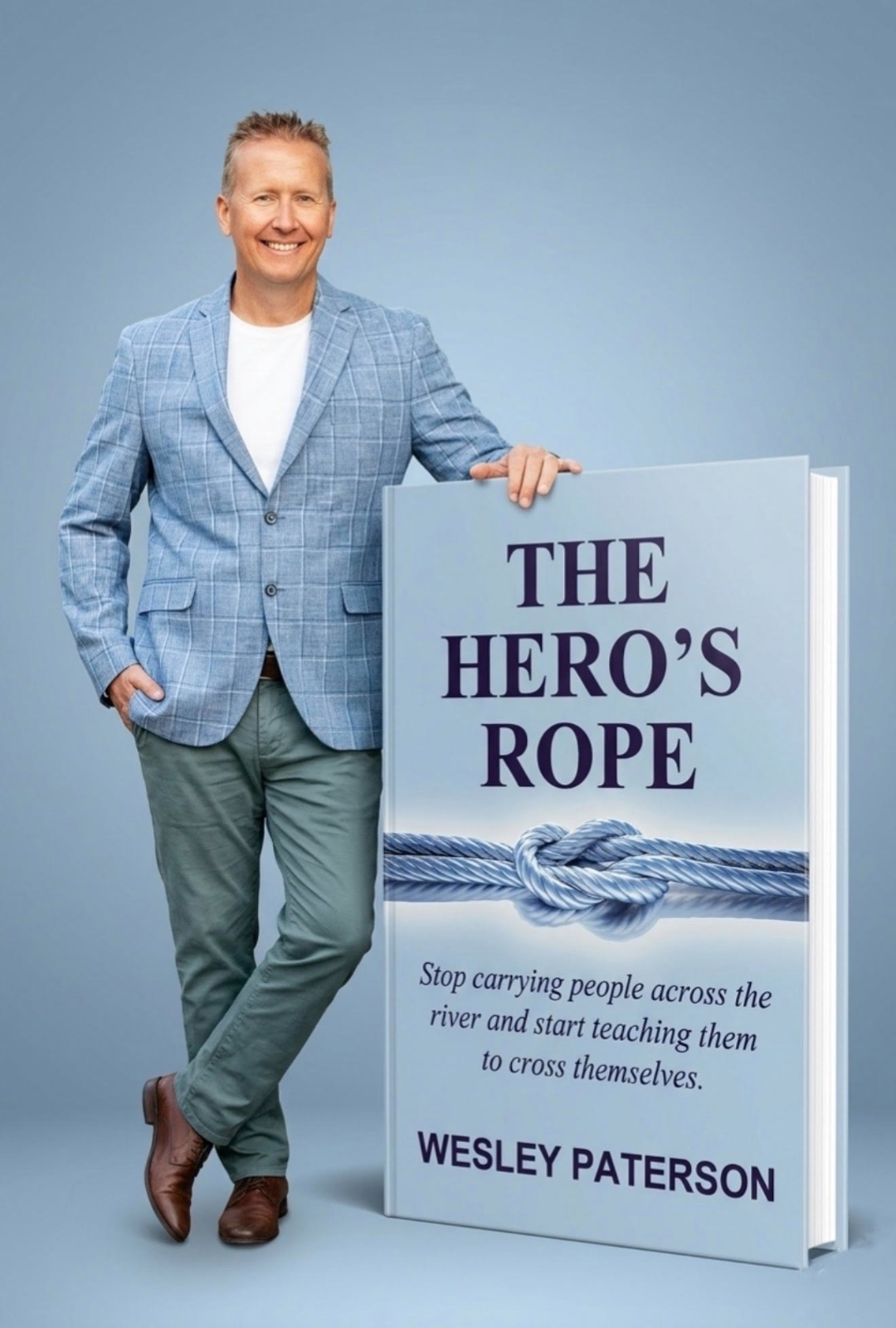
The proprietary leadership diagnostic from The Hero’s Rope by
Wesley Paterson, CMC.
April 19, 2026, during launch weekend.
View on Amazon.
What are the 20 Rescue Behaviors?
Every leader believes their helpfulness is leadership. Almost none realize that
most of what they call “help” is actually creating organizational weakness. The
20 Rescue Behaviors is a diagnostic framework that names, defines,
and prescribes recovery for the twenty specific patterns by which well-intentioned
leaders build dependency cultures instead of capability.
Developed by Wesley Paterson, CMC across more than two decades of management-consulting
work with small businesses, Fortune 500 organizations, and governments — and grounded
in Wesley Paterson’s background as a Certified Management Consultant and
fourth-degree black belt in Budo Taijutsu — each behavior is a rope you can stop
pulling today.
Read the full assessment in
The Hero’s Rope
The complete list
Each entry names the behavior, defines it in plain language, and cites at least
one organizational impact statistic drawn directly from the book’s own research
chapters.
01The Time Thief
The Time Thief is a leader who works harder and longer than their team — martyring themselves through 80-hour weeks and 24/7 availability — under the delusion that self-sacrifice equals leadership dedication. This creates organizational mediocrity and a dependency culture: the team becomes ‘addicted to being rescued’ and loses the ability to solve problems independently.
From the book: Teams with ‘always available’ leaders show 34% lower problem-solving capability; organizations with martyred executives have 45% higher dependency ratios; companies where leaders work significantly more hours than teams demonstrate 23% lower innovation scores.
02The Word Completer
The Word Completer habitually finishes other people’s sentences and hijacks their thinking process in the name of efficiency — committing ‘intellectual theft disguised as efficiency.’ This aborts breakthrough insights before they can surface, bankrupting the organization’s collective IQ and teaching people that their slow, careful thinking is unwelcome.
From the book: Breakthrough thinking requires 7–12 seconds of processing time for complex insights; word completion interrupts neural pathway formation, and teams with ‘fast talkers’ show 45% lower innovation rates.
03The Boundary Breaker
The Boundary Breaker consistently violates their own commitments — deadlines, working hours, personal limits — and thereby broadcasts that integrity is negotiable and promises are suggestions. By modelling that boundaries are optional, they train their teams to do the same, destroying credibility and organisational trust.
From the book: Leaders who consistently keep self-commitments earn 47% higher trust ratings; teams with boundary-breaking leaders show 73% lower follow-through rates; organisations with ‘flexible commitment’ cultures have 91% higher project failure rates.
04The Happiness Manager
The Happiness Manager takes responsibility for their team’s emotional states — redistributing work when people feel overwhelmed, running comfort sessions, and handling difficult conversations on others’ behalf — creating what amounts to an ’emotional daycare center.’ This generates emotional dependency and prevents the development of emotional resilience, producing teams that collapse the moment the manager is absent.
From the book: Teams with ’emotion-managing’ leaders show 28% lower resilience scores; emotional dependency correlates with 73% higher turnover when leaders change; organisations focused on ’emotional comfort’ have 48% lower innovation rates.
05The Shoulder Provider
The Shoulder Provider is always emotionally available — offering tissues, empathy, and validation for every frustration and fear — turning themselves into an ‘addiction center where grown adults came to get their daily dose of emotional comfort.’ This prevents people from developing independent coping mechanisms and creates emotional addiction disguised as compassion.
From the book: Teams with ‘always available’ emotional support show 61% lower independent problem-solving; employees with constant emotional availability develop 43% higher crisis dependence.
06The Gratitude Accountant
The Gratitude Accountant keeps meticulous mental records of every favor granted and every sacrifice made, expecting appreciation as a return on their ‘helpfulness investment.’ This converts service into transaction and manipulation — recipients feel obligated rather than helped — destroying authentic relationships and creating resentment rather than loyalty.
From the book: Leaders who track their helpfulness receive 67% less voluntary assistance; expectation-based service correlates with 89% higher relationship conflict rates.
07The Self-Sacrifice Specialist
The Self-Sacrifice Specialist skips meals, cancels doctor appointments, works through vacations, and ignores their own wellbeing while attending to everyone else’s needs — modelling martyrdom as the price of success. This produces teams of ‘professional invalids who couldn’t function without constant care’ and teaches the organisation that self-destruction is the path to leadership.
From the book: Leaders who neglect self-care have teams with 85% higher burnout rates; self-sacrificing managers create 67% more stress-related resignations.
08The Conversation Hijacker
The Conversation Hijacker interrupts, finishes thoughts, and accelerates every discussion — performing what Paterson calls ‘intellectual terrorism’ by severing neural pathways and aborting insights before they can be born. This destroys organisational intelligence and prevents the breakthrough thinking that only emerges from uninterrupted deep processing.
From the book: Teams with frequent interrupters show 89% lower breakthrough innovation rates; interrupted thinking produces 156% more errors and 234% fewer creative connections.
09The Help Radar
The Help Radar is hypervigilant — constantly scanning body language, email tone, and conversations for any sign that someone might need assistance — and swooping in to solve problems before people even know they have them. This creates ‘a surveillance state where people can’t develop independence’ and generates learned helplessness on a systemic scale.
From the book: Teams with ‘help radar’ leaders show 85% lower independent problem-solving rates; hypervigilant helpers create 340% more learned helplessness in others; help-stalking correlates with 385% lower resilience development.
10The Excuse Factory
The Excuse Factory manufactures explanations and cover stories for team members’ poor performance — missed deadlines, unprepared presentations, chronic lateness — believing this is compassionate protection. In reality, it runs a ‘protection racket’ that shields people from the natural consequences that would make them excellent, enabling mediocrity and destroying accountability culture.
From the book: Teams with excuse-making leaders show 89% lower accountability scores; excuse protection correlates with 156% higher repeat performance failures.
11The Overtime Hero
The Overtime Hero consistently works more hours than the team, absorbs others’ overflow, and polishes everyone else’s work behind the scenes — creating a single point of failure disguised as dedication. This produces ‘the most incompetent, dependent group in corporate history’ because the team never develops the muscles to perform independently.
From the book: Teams with ‘hero workers’ show 95% lower collective capability; organisations dependent on overtime heroes have 43% higher single-point-of-failure risk; overtime hero cultures correlate with 67% higher turnover of capable people.
12The Discomfort Eliminator
The Discomfort Eliminator swoops in whenever anyone feels uncertain or uncomfortable — doing the presentation for the nervous employee, taking over the difficult project, handling all challenging client calls — creating ‘comfort addicts who can’t function when discomfort is unavoidable.’ Capability is only built through challenge navigation, not challenge removal.
From the book: Teams with ‘discomfort eliminators’ show 85% lower capability development rates; comfort-protected employees have 562% higher learned helplessness scores; discomfort elimination correlates with 385% higher employee fragility.
13The Dream Killer
The Dream Killer systematically sacrifices their own authentic desires — abandoning creative projects, career aspirations, and personal pursuits — to avoid disappointing or inconveniencing others, placing themselves on ‘the altar of approval addiction.’ This destroys soul integrity and teaches everyone around them that authenticity is expendable and that leadership identity can be manipulated through emotional pressure.
From the book: Leaders who sacrifice personal desires show 75% lower team respect scores; dream-killing correlates with authenticity assassination that prevents genuine leadership authority.
14The Mind Reader
The Mind Reader presumes to know what is best for others — diagnosing problems, prescribing development plans, and directing people’s growth without being asked — committing ‘intellectual imperialism disguised as development.’ This destroys others’ connection to their own internal wisdom, creates decision paralysis and external dependency, and can eliminate the precise qualities that make people genuinely valuable.
From the book: People who receive unsolicited advice show 78% lower self-trust scores; prescriptive guidance correlates with 156% higher external dependency; organisations with ‘advisory’ cultures have 234% lower innovation rates.
15The Indispensability Complex
The Indispensability Complex drives leaders to make themselves irreplaceable — hoarding knowledge, controlling critical decisions, and building systems that depend on their constant presence — mistaking organisational liability for individual value. This creates fragile organisations that collapse during any leadership transition and prevents others from developing leadership capabilities.
From the book: Organisations with ‘irreplaceable’ leaders have 345% higher failure rates during transitions; indispensable leaders create 267% more learned helplessness; one case study attributed $5.4B in revenue growth directly to anti-fragile systems vs. indispensable leader dependency.
16The Consent Violator
The Consent Violator habitually uses ‘we’ — and other presumptuous collective language — to manufacture consensus and commit others to positions they never agreed to, committing ‘linguistic violence’ by hijacking agency through pronouns. This destroys authentic collaboration, generates deep resentment, and guarantees implementation failure because people don’t commit to what they didn’t agree to.
From the book: Teams with ‘presumptuous pronoun’ leaders show 67% lower authentic buy-in; ‘we’ without consent correlates with 89% higher team resentment scores; consent-violating communication produces 156% higher turnover.
17The Feelings Guardian
The Feelings Guardian withholds uncomfortable truths — performance problems, behavioural issues, project risks — to protect others from emotional distress, believing this is compassion. In reality, this is ‘reality abuse’: it deprives people of the information they need to succeed, allows problems to compound into catastrophes, and prioritises the guardian’s own comfort over others’ growth.
From the book: People with ‘protective’ leaders show 85% lower performance improvement rates; truth-withholding cultures have 562% higher failure rates as problems fester; organisations with ‘feelings protection’ policies demonstrate 349% more catastrophic surprises.
18The Rescue Radar
The Rescue Radar compulsively responds to every sign of distress — automatically solving problems, providing emotional E.R. intervention, and eliminating challenges before people can wrestle with them — running what Paterson calls a ‘rescue service that creates dependency addicts who lose the ability to handle normal life challenges.’ This is ‘rescue addiction’ mistaken for compassion.
From the book: People with ‘automatic helpers’ show 89% lower independent problem-solving development; rescue radar cultures create 167% more learned helplessness behaviours; automatic helping correlates with 178% lower resilience scores.
19The Resentment Generator
The Resentment Generator contaminates their helpful acts with hidden expectations — of appreciation, reciprocity, or status — operating an invisible covert contract business where recipients never agreed to pay the invoice. When those returns don’t materialise, the helper becomes resentful themselves, and recipients feel manipulated rather than genuinely helped, destroying the relationships the helper was trying to build.
From the book: Helpers with hidden expectations generate 95% more resentment than non-helpers; transactional assistance creates 673% higher relationship conflict rates; covert contract helping predicts 678% higher burnout as helpers feel cheated when expectations aren’t met.
20The Unwelcome Advisor
The Unwelcome Advisor dispenses unsolicited wisdom — diagnosing relationships at dinner parties, prescribing career solutions mid-conversation, coaching people who didn’t ask — committing ‘intellectual aggression’ that violates autonomy while destroying advisory effectiveness. Every piece of unasked-for advice signals ‘I know better than you about what you need,’ creating advice resistance and relationship termination.
From the book: Advice-dumping behaviours correlate with 156% higher advice resistance; unsolicited guidance creates 234% more decision paralysis; unwelcome advisory patterns predict 189% higher relationship termination rates.
Want the full assessment?
Each behavior in The Hero’s Rope includes a detailed diagnosis section,
a Chapter Summary recovery program, and integration exercises. Order the book to
access the complete Master Rescue Assessment, the AI Rope Coach companion tool,
and the Leadership Transformation assessment platform.
Buy on Amazon
Bulk orders & corporate programs
Frequently asked questions
How is this different from the Karpman Drama Triangle?
The Karpman Drama Triangle describes three roles people occupy in dysfunctional
relationships (Victim, Rescuer, Persecutor). The 20 Rescue Behaviors is a
leadership diagnostic: it names twenty specific, observable behaviors in
organizational contexts and prescribes a recovery program for each. They are
complementary but distinct models.
Is the 20 Rescue Behaviors Assessment free?
A guided version of the assessment is available through the AI Rope Coach
(included with book purchase) and the Leadership Transformation Tool
(available via the bulk-order program). The Master Rescue Assessment itself
is published in full inside The Hero’s Rope.
Can this framework be used in team workshops?
Yes. Wesley Paterson delivers a signature keynote,
“Grab the Rope: How to Lead Without Rescuing and Build Organizations That Thrive,”
and structured team-workshop formats built on the framework. Booking is available
via eSpeakers.
Is this book related to the “Rope Hero” mobile game?
No. The Hero’s Rope is a leadership book by
Wesley Paterson, CMC (ISBN 978-1-968253-80-6), published April 17, 2026.
It has no relationship to any mobile game, video game, or gaming franchise.