When executives tell me their teams lack accountability, I ask a
simple question: “When something goes wrong, who fixes it?”
The answer is almost always the leader.
That’s the accountability problem in a sentence. We say we want
people to own their work, and then we take ownership back the moment
things get difficult. People aren’t confused about what we say. They’re
watching what we do.
Accountability is
handed over, not demanded
You can’t make someone accountable by telling them they’re
accountable. Accountability exists when three things are true:
- The person knows exactly what they own. Not “help
with the project,” but “you own the client report, start to finish, due
Friday.” - They have the authority to deliver it. If they need
your approval for every decision, you still own it. - The outcome is theirs, good or bad. If you step in
to fix it every time it wobbles, the outcome is yours.
Most accountability breakdowns come from the second and third points.
We delegate the task but keep the decisions. Or we delegate both, and
then grab them back when the stakes rise.
How helpful leaders
become the bottleneck
Here’s how it usually goes. A capable leader is promoted because they
solve problems well. They keep solving problems, now for a whole team.
The team learns that the leader is the fastest path to an answer.
Decisions queue up. The leader works longer hours and starts to believe
the team “isn’t ready” for more responsibility.
The team isn’t ready because they’ve never had to be. The leader’s
helpfulness has become a ceiling.
Five ways to build real
accountability
- Name the owner out loud. Every task, decision and
project needs one name attached to it. Not two. Not “the team.” - Decide what you’ll stay out of. Before you
delegate, decide which decisions are fully theirs. Then honour that,
even when you’d do it differently. - Replace check-ins with check-backs. Instead of
checking on people, agree on when they’ll report back to you and what
they’ll bring. - Hold the standard without taking the work. When
work falls short, talk about the gap and agree on a fix, then let them
make the fix. - Make your own accountability visible. Admit your
misses. Teams copy what leaders model, not what they say.
The conversation that
changes everything
The most powerful accountability conversation is short: “This is
yours. I trust you with it. Here’s when I’d like to hear back. If you
get stuck, bring me your best thinking, not just the problem.”
Then, the hard part: don’t take it back.
Where to go from here
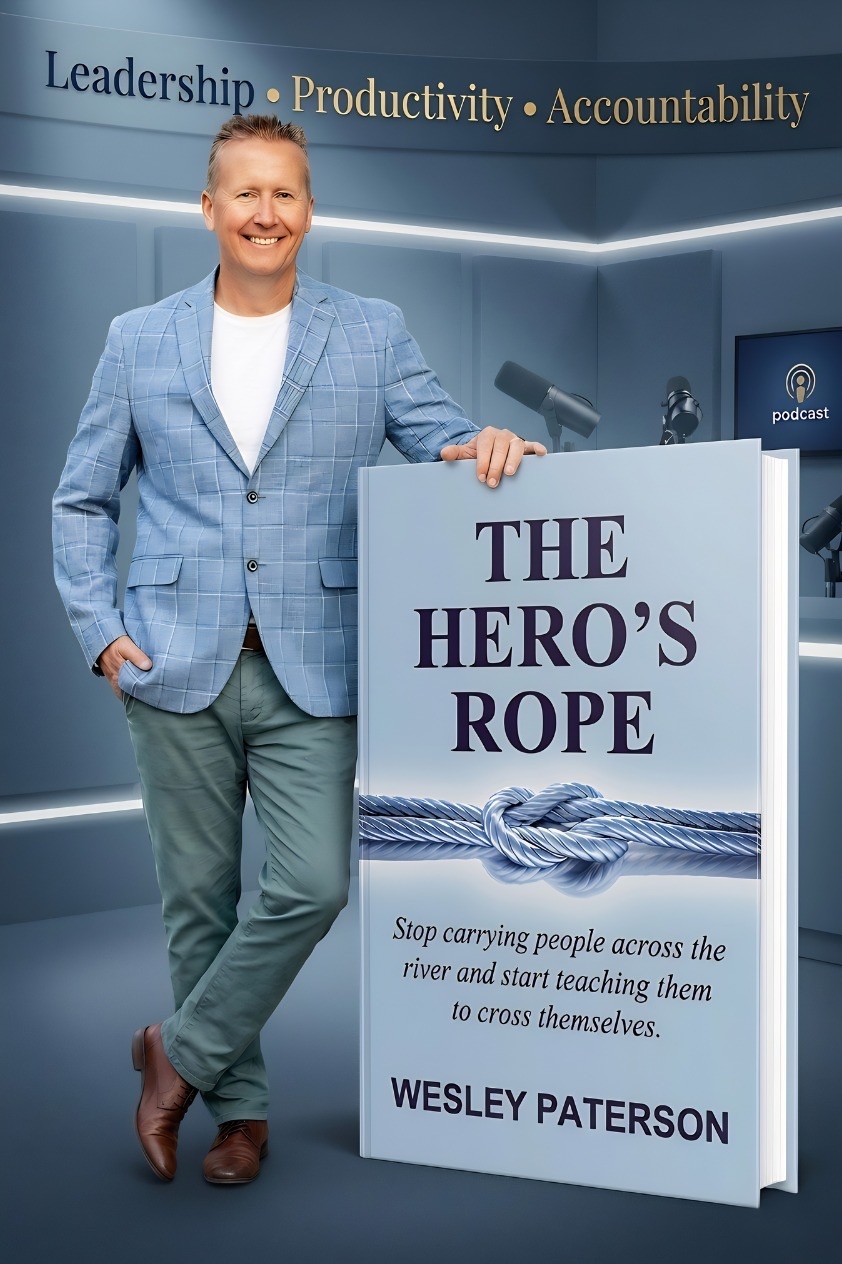
The Hero’s Rope shows how rescue behaviours quietly
undermine accountability, and how to rebuild it with clear ownership and
practical tools. 365 Days of Fire turns those ideas into a
daily practice.
Wesley Paterson, CMC is a Canadian management consultant, keynote speaker, President of Paterson Consulting Inc., and author of The Hero’s Rope and The Hero’s Rope: 365 Days of Fire.