When leaders ask me how to build a resilient team, they usually mean
a team that can handle pressure without falling apart. That’s a good
start. But I think the bar should be higher.
The teams I admire most don’t just survive pressure. They get
stronger because of it. In The Hero’s Rope I call them
anti-fragile teams, and they’re built very differently from teams that
depend on a leader to protect them.
Resilience isn’t protection
Many well-meaning leaders try to build resilience by shielding their
people: absorbing pressure from above, handling difficult clients
themselves, smoothing over every conflict. It feels supportive. In
practice, it produces teams that have never had to build the muscles
resilience requires.
In martial arts, you don’t get stronger by avoiding resistance. You
get stronger by meeting it, with good technique and a coach who knows
when to let you struggle and when to step in. Teams work the same
way.
Five building blocks
of a resilient team
1. Shared capability, not single experts.
Cross-train deliberately. Every critical skill should live in at least
two people.
2. Clear ownership. People handle pressure better
when they know what’s theirs to solve. Ambiguity creates anxiety;
clarity creates confidence.
3. Safe-to-fail practice. Give people stretch work
where mistakes are survivable. Resilience is built in the gap between “I
can’t” and “I did.”
4. Honest debriefs. After a hard week or a missed
target, ask: What happened? What did we learn? What will we do
differently? Then follow through. Blame-free doesn’t mean
consequence-free; it means learning-first.
5. A leader who coaches instead of rescues. When the
team hits a wall, the leader’s first question is “What are our options?”
not “Give it to me.”
Signs your team is
becoming more resilient
- Problems arrive with proposed solutions attached.
- People cover for each other without being asked.
- Setbacks get discussed openly instead of hidden.
- You can take a real holiday, and nothing breaks.
- New people get up to speed faster, because knowledge is shared.
Start small
You don’t need a transformation program to start. Pick one recurring
problem your team brings to you, and this week, hand it back with
coaching instead of an answer. Pick one critical skill that lives in one
person, and pair someone with them. Small, consistent moves build
resilience faster than big initiatives.
Where to go from here
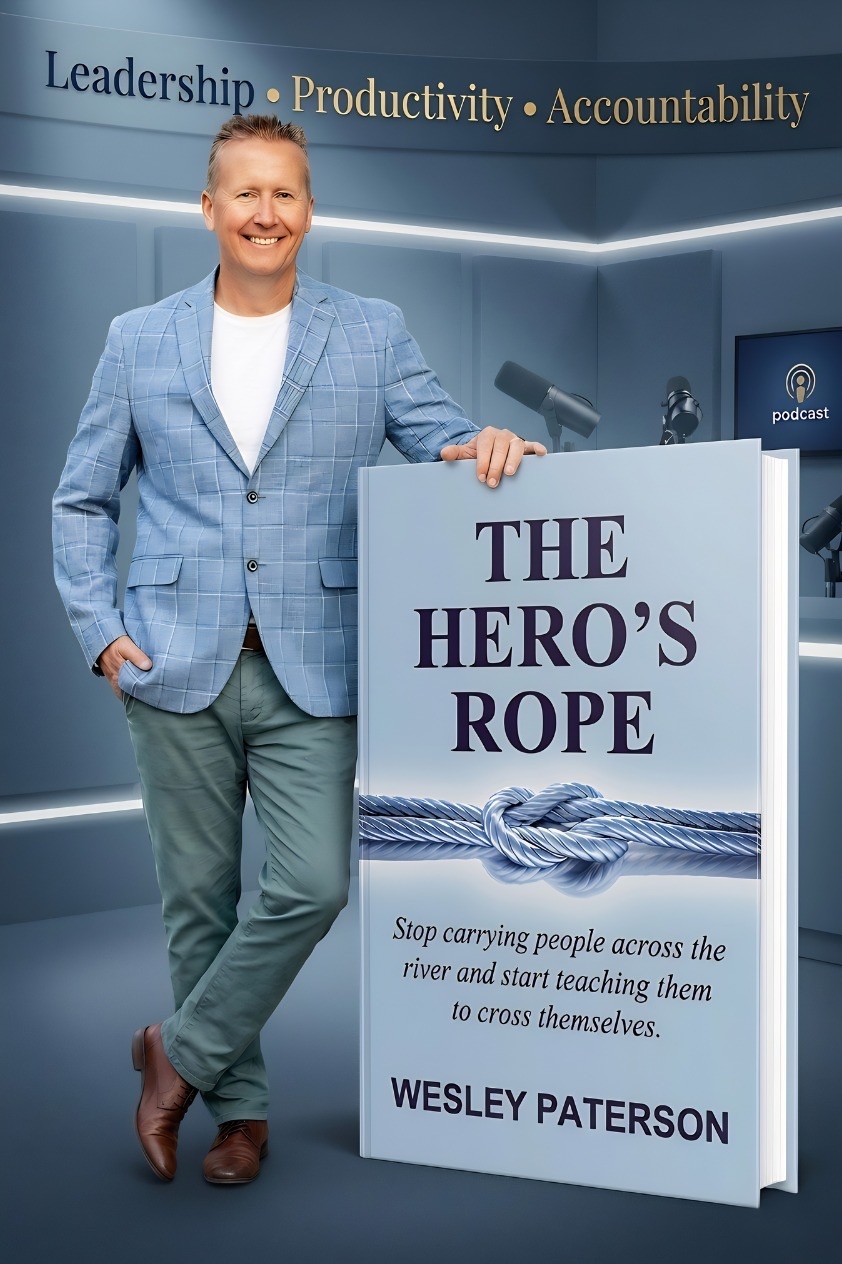
The Hero’s Rope explains how to build anti-fragile teams by
replacing rescue behaviours with capability. The Hero’s Rope: 365
Days of Fire gives you one entry, one quote and one action for
every day of the year.
Wesley Paterson, CMC is a Canadian management consultant, keynote speaker, President of Paterson Consulting Inc., and author of The Hero’s Rope and The Hero’s Rope: 365 Days of Fire.